We provide driveway resurfacing throughout the HX1, HX2 and HX3 postcode districts of Halifax, from Ovenden to Skircoat, and in nearby Elland, Sowerby Bridge and Brighouse. Every quote in Halifax covers the base, edges and drainage as well as the surface, so you know what is causing the problem before you pay to fix it.
Resurfacing sits between repair and replacement, and for a lot of drives it is the sweet spot. Halifax Landscaping & Driveways provides driveway resurfacing across Halifax for concrete, tarmac and gravel drives, giving homeowners a renewed surface over a base that is still doing its job. It is for anyone whose drive is firm and level underneath but worn, stained, crazed, greyed or thinned on top, and who would rather not pay for skips, excavation and a new sub-base to fix a surface problem.
Each material is resurfaced differently. Concrete gets a thin bonded overlay, either a hard-wearing polymer-modified mortar or a decorative coloured and stamped finish. Tarmac gets a new hot-laid wearing course, with the old one planed off first where levels are tight. Gravel gets regraded, its base firmed and a fresh top dressing of gravel or crushed stone spread and compacted.
What the three have in common is preparation. A resurfaced drive is only as good as the cleaning, grinding, patching and edging that happens before the new surface goes down, and that is where our team spends most of its time. The result in Halifax is a drive that looks new and comes with a written guarantee.
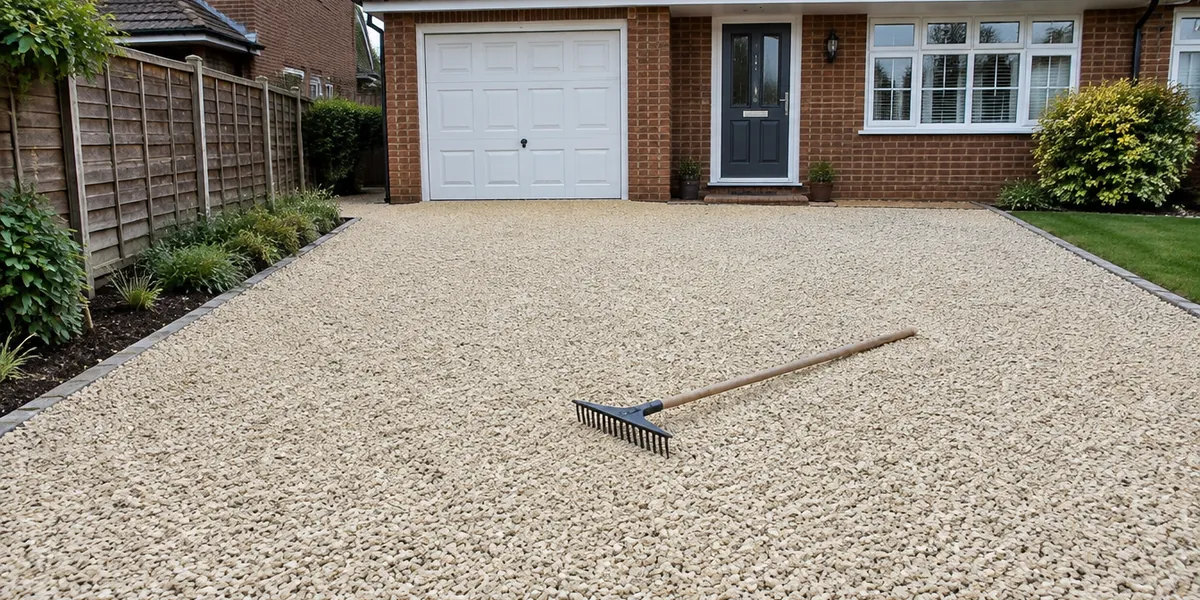 Gravel Driveway ResurfacingGravel Top Dressing, Crushed Stone Top Dressing
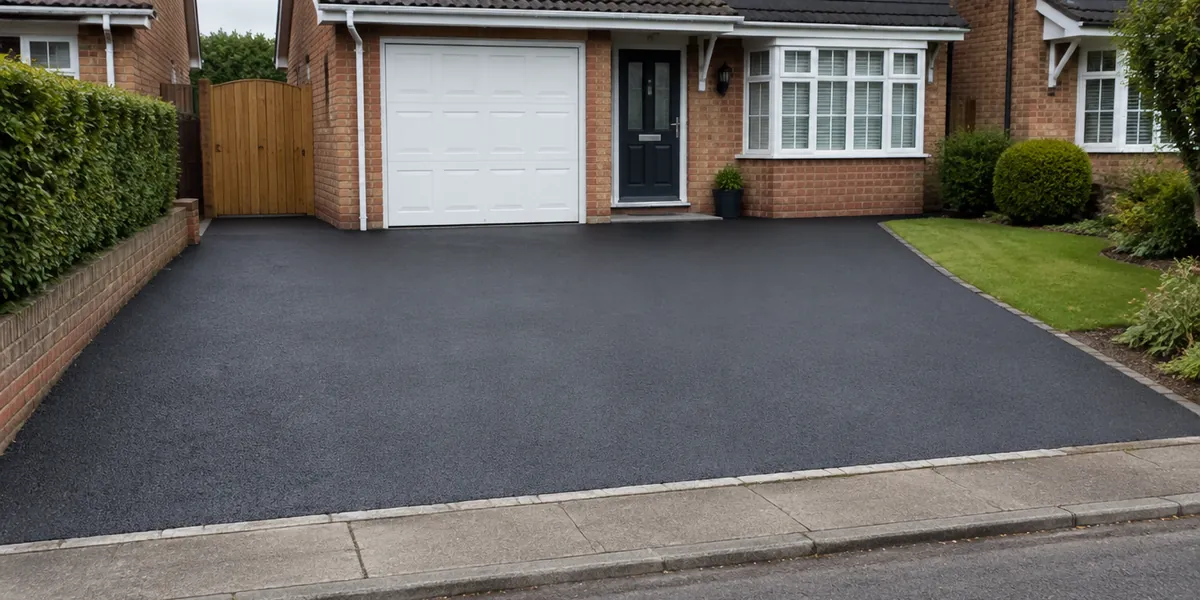 Tarmac Driveway ResurfacingTarmac Overlay, Plane and Overlay Resurfacing
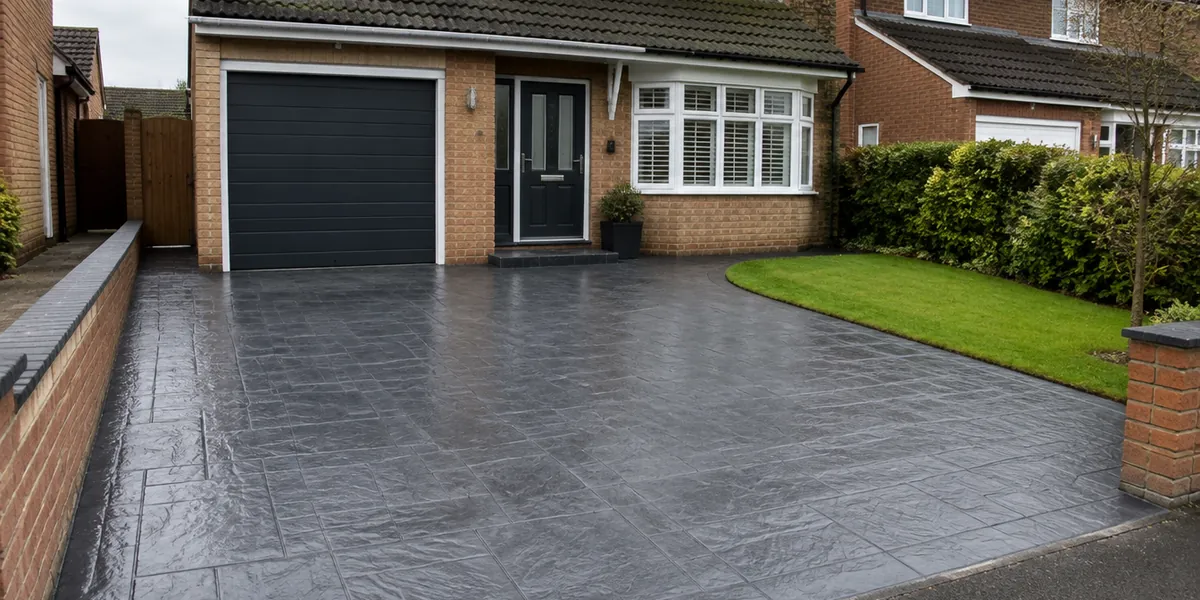 Concrete Driveway ResurfacingDecorative Concrete Overlay, Polymer-Modified Concrete Overlay
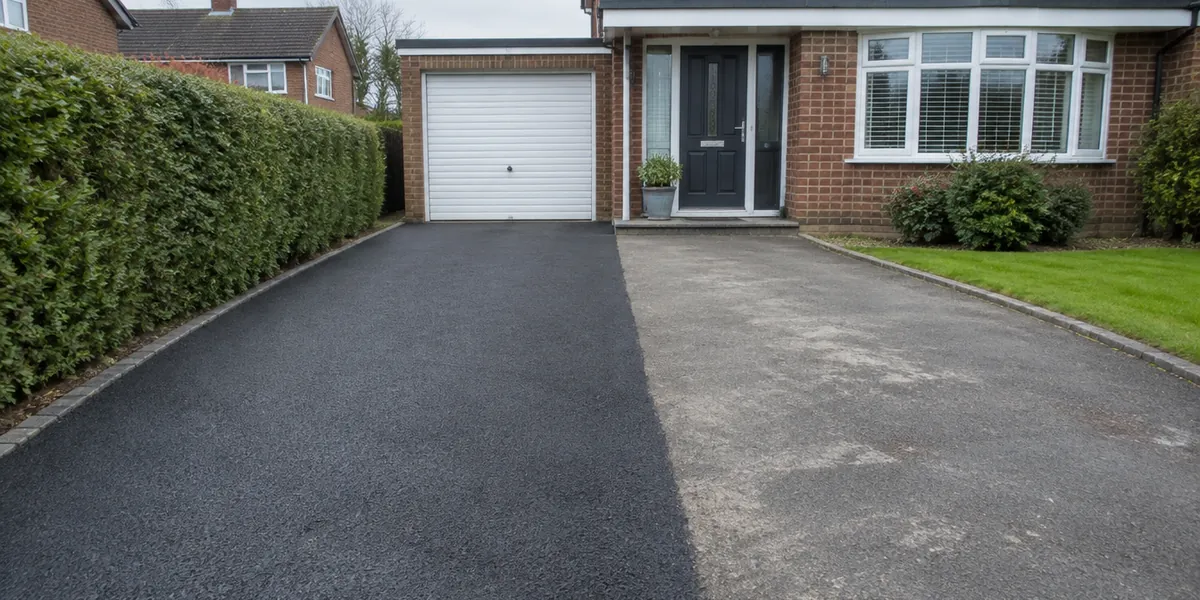
Where We Offer Driveway Resurfacing Services We Offer in Halifax
Our resurfacing work in Halifax covers the three drive surfaces that can sensibly be renewed in place. Concrete driveway resurfacing lays a bonded overlay over a sound slab, from a plain polymer-modified mortar with a broom finish to a decorative overlay that can be coloured and stamped to look like stone or cobbles. Tarmac driveway resurfacing replaces the worn wearing course with hot dense bitumen macadam, either straight over the existing surface or after planing the old layer off to keep the original level. Gravel driveway resurfacing regrades the drive, firms its base and lays a fresh dressing of decorative gravel or angular crushed stone.
Block paving is not on the list because it does not need resurfacing in the same sense. A worn block paved drive is lifted, the base corrected and the same blocks relaid, which we cover under driveway repair. Resin-bound surfaces are a form of resurfacing in their own right and we quote for those separately.
Every resurfacing job starts with us checking that the base is up to it. If a drive is sinking, heaving or breaking up from below, a new surface will follow the same movement and we would rather tell you that than take the money.
Concrete Driveway Resurfacing in Halifax
A concrete slab that has gone pitted, spalled, stained or simply dull can be renewed with an overlay a few millimetres to around 20 mm thick, bonded to the old surface. It avoids the noise, dust and skips of breaking out and re-pouring, and on a Halifax drive with a sound slab it is nearly always the cheaper option.
We offer two systems. A polymer-modified concrete overlay is a cement and graded sand mortar with an acrylic or SBR polymer in the mix, which gives it the bond strength and frost resistance to sit on an old slab for years. We lay it from a feather edge up to 20 mm, use it to correct dips that hold water and finish it with a broom for grip. A decorative concrete overlay is a finer material, coloured through with pigment and either broom-textured or stamped with polyurethane mats to copy slate, flagstone or cobbles, then sealed to lock the colour in.
Both depend on preparation. The slab is pressure washed, degreased, ground or shot-blasted to remove laitance and open the surface, and cracks are filled with a flexible compound. Expansion joints are re-cut through the overlay so the slab can still move. The overlay is kept damp while it cures and cars stay off it for around a week. We show you samples before we start and our overlay work is guaranteed in writing.
Tarmac Driveway Resurfacing in Halifax
Tarmac wears from the top. The bitumen binder dries out, the surface goes grey and loose, and cracks let water into the layers beneath. Once that has happened across most of the drive, individual patches stop making sense and a new wearing course is the answer. Our tarmac resurfacing work in Halifax comes in two forms.
A tarmac overlay leaves the existing drive in place as the base and lays a new 25 to 40 mm wearing course of hot dense bitumen macadam on top. We clean the old surface, cut out and fill potholes, install kerbs or block edging on a concrete haunch where the edges have crumbled, spray a bitumen emulsion tack coat and lay and roll the new layer while it is hot. It raises the surface, so it suits drives that sit well below thresholds and the damp-proof course.
Plane and overlay resurfacing mills the old wearing course off with a cold planer first, so the new layer finishes at the original height. It is the right method where a garage threshold, the damp-proof course or the public footway leaves no room to come up, and it lets us inspect and repair the base course before overlaying. The planings go for recycling or stay on site as hardcore if you want them. Either way the drive is usable the following morning and comes with a written guarantee.
Gravel Driveway Resurfacing in Halifax
Gravel drives lose stone steadily to tyres, shoes, rain and the ground beneath, and after a few years the surface is thin, muddy in patches and full of weeds. Resurfacing renews the whole surface in one visit, and across Halifax it is the most common gravel job we do.
Gravel top dressing refreshes a drive with decorative rounded or part-rounded stone: shingle, pea gravel, flint, buff chippings or slate. We rake back and regrade what is there, scrape off any stone that has turned to a mat of mud and roots, firm the base with compacted Type 1 MOT where it is soft, lay a geotextile membrane if there is none and spread the new stone at 30 to 50 mm, graded to a camber and plate-compacted. We recommend 20 mm stone for drives because 10 mm travels on tyres.
Crushed stone top dressing uses angular granite, limestone or basalt chippings instead. The sharp particles lock together under compaction, so the surface resists ruts, stays put on gentle slopes and is firm enough to push a barrow across. It is our recommendation for drives with daily car use, longer drives and anywhere ruts have formed before. On slopes and at entrances we often add a plastic stabilisation grid filled with the new stone, and we fit edging where gravel has been escaping onto lawns or the pavement.
Why Homeowners in Halifax Choose Us for Driveway Resurfacing
Resurfacing is the part of the drive trade most prone to shortcuts, because the new surface hides whatever was done underneath for a year or two. Halifax Landscaping & Driveways does not take them. We grind concrete before overlaying it, we edge tarmac before laying it and we firm and membrane gravel before dressing it, because that preparation is what decides whether a resurfaced drive lasts two winters or twenty.
We are a local company with a fixed address, full public liability insurance and a registered waste carrier licence. Every job begins with a site visit where we check the base, measure levels against thresholds and the footway and tell you honestly which method suits your drive. You then get a written, itemised quote with no pressure and no surprises.
Because we also install new concrete, tarmac, block paving, gravel and resin-bound drives and carry out driveway repair across Halifax, we can compare resurfacing against the alternatives on a like-for-like basis. Our resurfacing work carries a written guarantee, and we show samples of overlays, wearing courses and stone before anything goes down.
From First Call to Finished Job
- Site survey: we inspect the base for movement, probe soft spots, measure the drive and check levels at the house, garage and footway.
- Written quote: an itemised quote for the resurfacing method, preparation, edging, any base repairs, the surface material and waste removal.
- Scheduling: we agree dates and tell you what weather the job needs and how long you will be without the drive.
- Preparation: the old surface is cleaned, ground, planed or raked back as appropriate, potholes and cracks are repaired and edges restrained.
- Base work: soft base is replaced with compacted Type 1 MOT, membranes laid for gravel, and primers or tack coats applied for overlays.
- Surfacing: the overlay, wearing course or stone is laid to the right depth, compacted or trowelled and finished with falls checked throughout.
- Curing and handover: the surface is protected while it cures or cools, sealed if specified, the site is cleared and the written guarantee handed over.
Most driveway resurfacing in Halifax takes between one and four days on site. Concrete overlays need a week before cars go on them; tarmac is ready the next morning; gravel is ready as soon as we leave.
Driveway Resurfacing Around Halifax
Our resurfacing team covers the whole of Halifax. Concrete overlays are popular in Skircoat and Warley, and they suit any original slab that has spalled over a base that is still perfectly sound. Tarmac resurfacing keeps us busy in Illingworth, with plane and overlay the usual method wherever a garage sits close to the drive level, and in Ovenden we take on a mix of tarmac and gravel work. If you have a longer gravel drive in King Cross, crushed stone top dressing is usually the best value. We also travel to nearby Elland, Sowerby Bridge and Brighouse around Halifax for resurfacing jobs of any size.
Choosing a landscaping company in Halifax that also lays driveways keeps one contractor responsible for the result.
Your Questions Answered
What is the difference between resurfacing and replacing a driveway?
Resurfacing renews the top layer over an existing base that is still sound: an overlay on concrete, a new wearing course on tarmac or a fresh top dressing on gravel. Replacement digs the whole drive out, builds a new sub-base and lays a new surface from scratch. Resurfacing is quicker and far cheaper, but it only works where the base beneath has not failed.
How do I know if my driveway is suitable for resurfacing?
The base has to be firm and the drive should not be sinking, heaving or breaking into pieces. Surface problems such as greying, crazing, pitting, spalling, staining and thinning gravel are all fine to resurface. We check this on the site visit by probing the base and looking at movement, and we tell you plainly if resurfacing is not the right spend for your drive.
Which driveway surfaces can be resurfaced in Halifax?
We resurface concrete, tarmac and gravel drives across Halifax. Block paving is not resurfaced in the same way; worn block paving is lifted, the base corrected and the blocks relaid, which comes under our driveway repair service. Resin-bound surfaces can also be laid over a sound tarmac or concrete base as a form of resurfacing, and we quote for those separately.
How long does driveway resurfacing take?
Tarmac resurfacing is usually one to two days with the drive back in use the next morning. Concrete overlays take two to four days on site plus around a week of curing before cars can park on them. Gravel resurfacing is normally a day, or two for longer drives with base or edging work, and the drive can be used immediately.
Will resurfacing raise the level of my driveway?
A tarmac overlay raises the surface by 25 to 40 mm and a concrete overlay by up to 20 mm, which can matter at garage thresholds, the damp-proof course and the public footway. Where there is no room to come up we plane tarmac off first or keep a concrete overlay thin. Gravel resurfacing brings the stone back to its intended depth rather than raising it.
Do I need planning permission to resurface my driveway?
No. Resurfacing an existing drive is maintenance and does not need planning permission. The permeable surfacing rules and the 5 m² limit apply only to new impermeable areas in front gardens. Gravel is permeable in any case. If a resurfaced drive sheds water onto the public footway we usually suggest a channel drain at the entrance, which we can fit while the surface is up.